
Computing · 10:30
USB flash drive
A whole presentation, on something smaller than your thumb. One of the first patents for the USB stick was filed by an Israeli company in 1999.
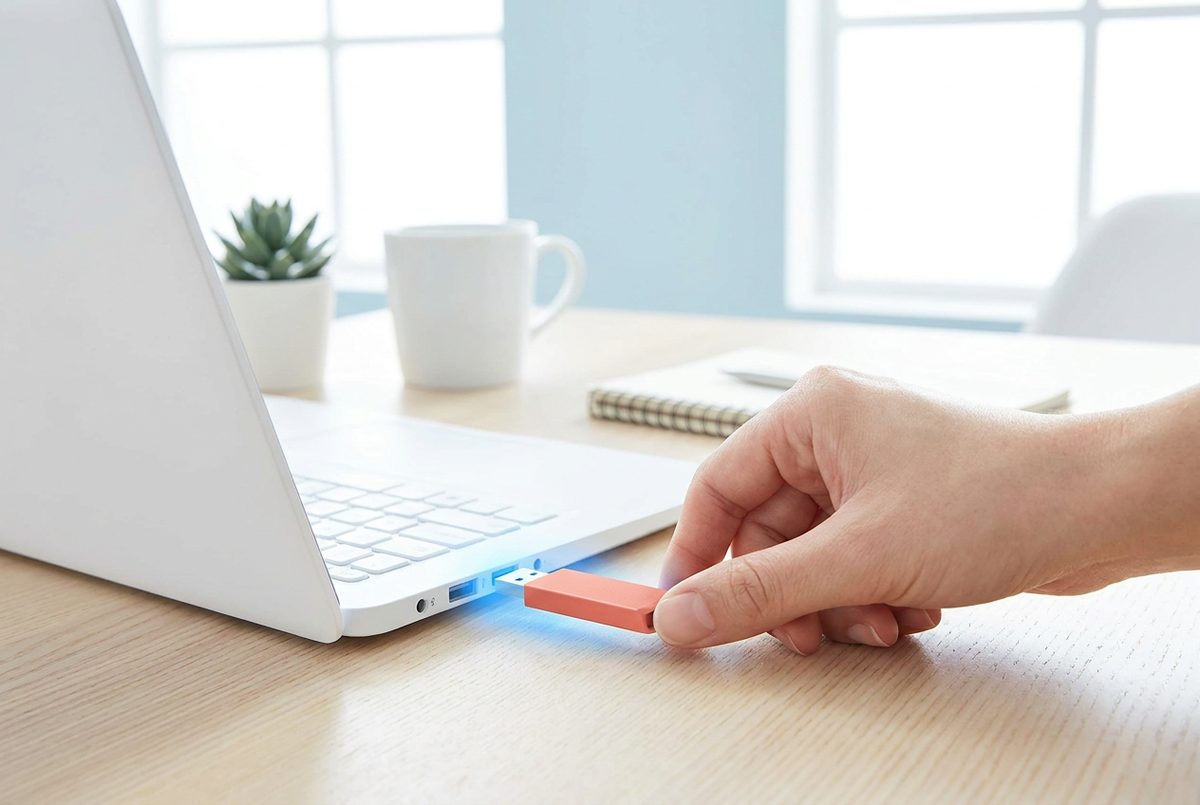
The everyday moment
Ten minutes before the meeting, the projector won't connect to your laptop. You copy the slides onto a stick, plug it into the room's computer and you're on. No cables, no drivers, no software to install.
How it works
- Flash memoryInside is a flash memory chip that keeps data without power, so files stay put when you unplug it.
- A small controllerA tiny controller decides where each file is stored and spreads the writing across the chip so it wears evenly.
- Looks like a diskThrough the USB plug the stick presents itself as an ordinary storage device, which is why computers recognise it without extra software.
- Powered by the portIt draws its power from the USB connection, so it needs no battery.
The Israeli story
M-Systems was founded in Kfar Saba in 1989 by Dov Moran and Aryeh Mergi. In 1995 it brought out DiskOnChip, one of the first flash-based storage products.
On 5 April 1999 Amir Ban, Dov Moran and Oron Ogdan of M-Systems filed a patent for combining flash memory with a USB connector through a USB controller. It was granted in November 2000. Other companies in Singapore, China and at IBM filed similar claims around the same time, but these three are often credited with the first patent for the USB stick.
M-Systems sold its drive as the DiskOnKey, starting in 2000 with 8 MB of storage. From December 2000, IBM sold M-Systems' drives under its own brand in North America. In 2006 SanDisk bought M-Systems for $1.55 billion.
Where you meet it today
USB sticks now hold a terabyte or more. The same flash storage, with a controller managing it, sits inside phones, cameras and laptop drives.
Did you know?
The first DiskOnKey held 8 MB, about two phone photos today.