
Getting around · 07:55
Camera-based driver assistance
A small camera behind your windscreen watches the road with you. Teaching one cheap camera to understand traffic was the idea of a professor in Jerusalem.
The everyday moment
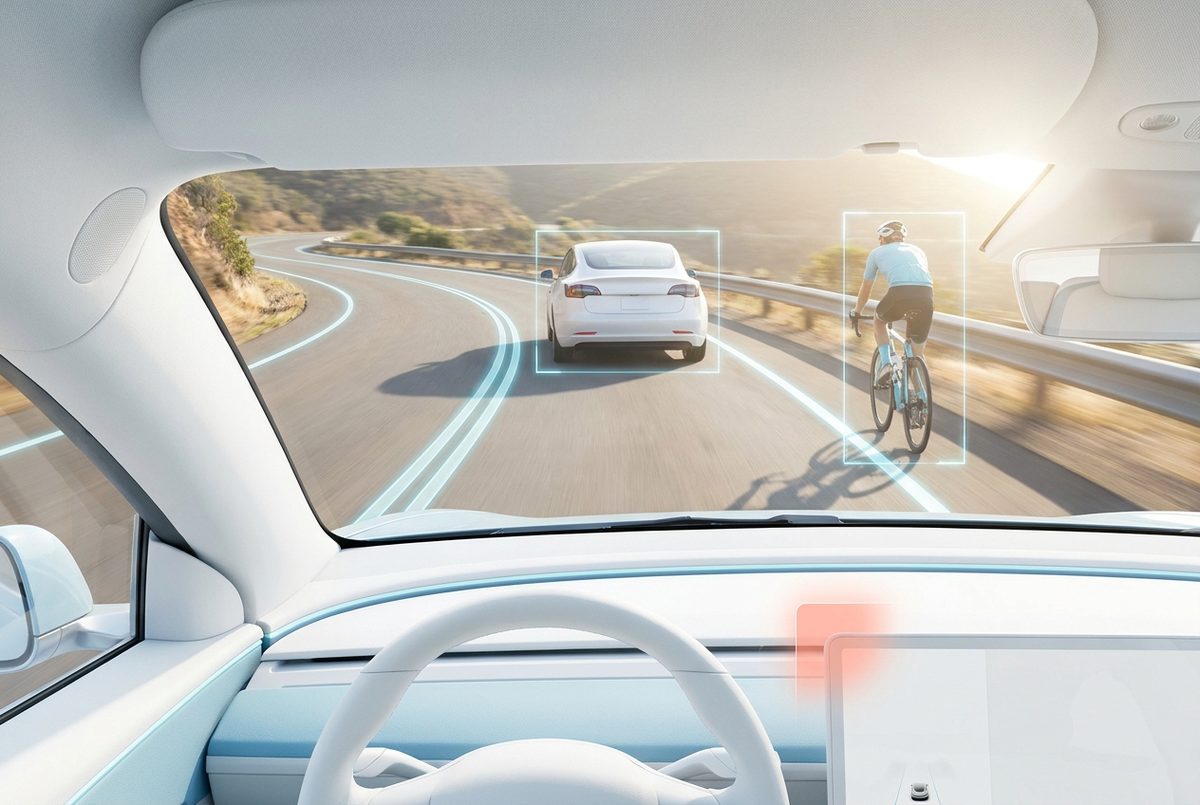
You glance at the radio for a second too long and the car chimes: you're drifting over the line. On another day it brakes on its own when the car in front stops short. Behind both is a camera the size of a matchbox, near your rear-view mirror, and a chip that reads the road dozens of times a second.
How it works
- One camera, not many sensorsMobileye's founding idea was that a single, low-cost camera plus clever software could do what others tried with expensive radar and lasers.
- A chip that recognises thingsThe EyeQ chip runs vision software that picks out lane lines, cars, cyclists, pedestrians and traffic signs in every frame.
- Judge the riskIt measures distances and closing speeds and works out whether you are leaving your lane or heading for a collision.
- Warn, then actFirst it warns you. In cars with automatic emergency braking or lane keeping, it can also brake or steer.
The Israeli story
Amnon Shashua, a computer science professor at the Hebrew University of Jerusalem, had developed a vision system that could detect cars using just a camera and software. In May 1999 he founded Mobileye in Jerusalem with Ziv Aviram to turn it into safety technology for ordinary cars.
The first EyeQ chip arrived in 2008. Early lane departure warnings appeared on Cadillac and BMW models, and the first EyeQ-based automatic emergency braking came on the BMW 7 Series. By the end of 2014 Mobileye was in 160 car models from 18 carmakers.
That year it listed on the New York Stock Exchange in what was then the biggest Israeli IPO in the US. In 2017 Intel bought it for $15.3 billion, then the largest purchase of an Israeli tech company. Mobileye is still headquartered in Jerusalem.
Where you meet it today
More than 27 carmakers use EyeQ chips for assisted driving. Cars with Mobileye also send tiny amounts of anonymous road data, about 10 kilobytes per kilometre, to keep detailed maps up to date for future self-driving systems.
Did you know?
Mobileye's mapping system builds 3D road maps from what ordinary customers' cars see on their daily drives.