
Computing · 09:00
The chip in the first IBM PC
The computer on your desk speaks a language that goes back to one chip from 1979. That chip was designed at Intel's laboratory in Haifa.
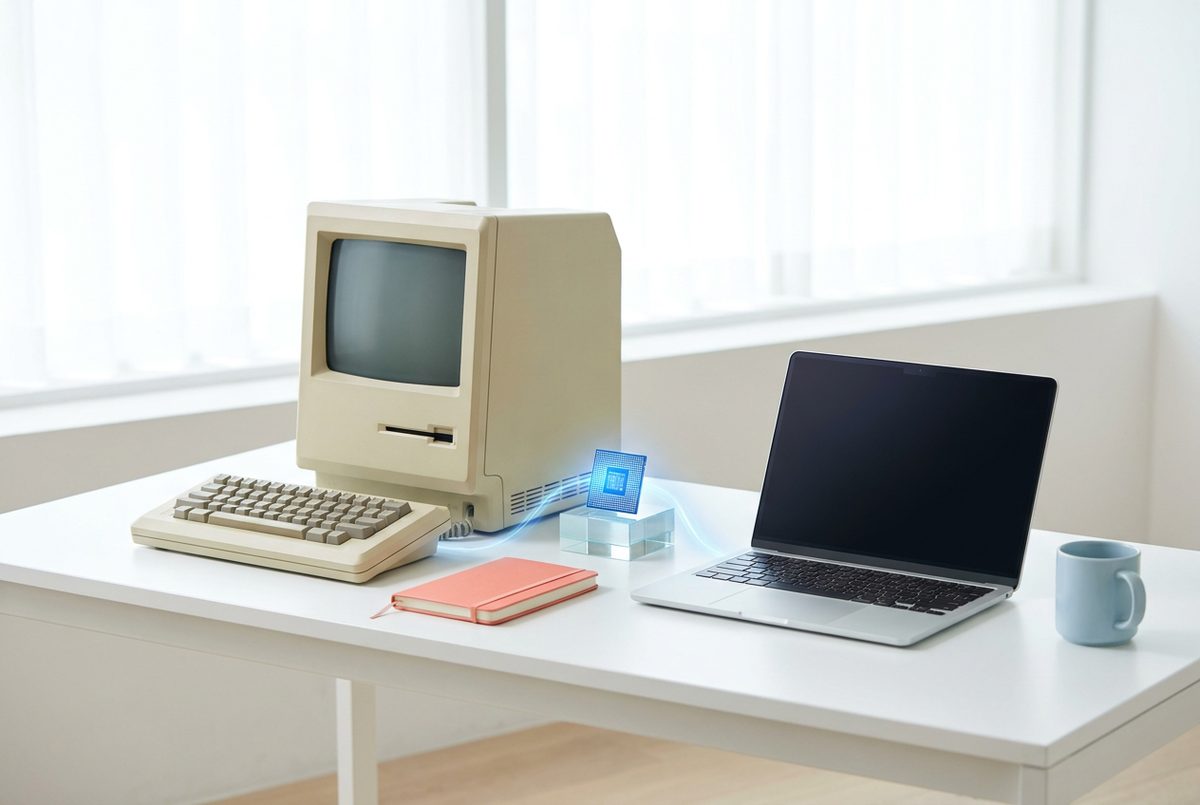
The everyday moment
You press the power button and the computer starts. Whether it runs Windows or Linux, its processor understands the same basic instruction set, called x86, that ran on the very first IBM PC. That compatibility, kept for more than forty years, is why old software still works on new machines.
What made it different
- A cheaper version of a fast chipThe 8088 kept the brain of Intel's 8086: the same instructions, the same registers and the same 1 MB of addressable memory.
- A narrower doorwayIt talked to the rest of the computer 8 bits at a time instead of 16. That made it a little slower, but it meant manufacturers could use cheaper, widely available parts.
- Good enough, and affordableThe chip ran at 5 MHz in its first version, with about 29,000 transistors. A modern processor has billions.
The Israeli story
Intel designed the 8088 at its laboratory in Haifa as a lower-cost version of the 8086. It was introduced on 1 June 1979.
When IBM built its first personal computer, it chose the 8088. Intel offered a better price and could supply enough chips, and the narrower bus let IBM build the machine around cheaper, familiar 8-bit components.
The IBM PC, and the many clones that copied it, set the pattern for personal computers. Every later chip in the family, from the 286 and 386 to today's Core processors, stayed compatible with the 8088's instructions.
Where you meet it today
Most laptops and desktops sold today, and a large share of the servers behind websites, still use x86 processors descended from the 8088.
Did you know?
IBM picked the 8088 partly because it let them use cheap, familiar parts, not because it was the fastest chip available.